Smart home solutions as one engineering system
We bring lighting, climate, security, energy, outdoor areas, and scenarios together into one coherent control architecture. No fragmented interfaces, no unnecessary panels — quiet, reliable, and refined
Solution Categories
Lighting
Lighting is something you experience every day. Smart lighting makes a home expressive, comfortable, and safe: scenarios, the right brightness, soft night lighting, and well-designed control logic without overloaded walls or unnecessary actions
- Lighting scenarios for different zones and situations: work, relaxation, dinner, movie time, night
- Automatic switching and dimming based on presence and time of day
- Soft nighttime pathway lighting for corridors, stairs, and bathrooms — without harsh light
- One coherent lighting control logic within a room instead of multiple disconnected switches
- Integration of lighting into wider home scenarios: “Away”, “Night”, “Guests”, “Cleaning”
- Connection with blinds and climate control: less glare, less overheating, more comfort
- Flexible zoning for different parts of the same space
- Clear and predictable control for all family members and guests
- “Night”: dimmed lighting and safe pathway illumination
- “Movie”: soft lighting mode in the living room while the blinds close
- “Guests”: comfortable lighting in shared areas with accent lighting where needed
- “Away”: unnecessary lights off and, when needed, presence simulation
Climate
Climate is about more than temperature. It is stable comfort without constant manual adjustments: heating, underfloor heating, ventilation, and cooling work together in line with your lifestyle and the specifics of each space
- Room-by-room climate control with individual modes for each zone
- Heating and underfloor heating as part of one overall comfort logic
- Integration of ventilation and cooling into home scenarios — depending on the task and equipment compatibility
- “Sleep”, “Morning”, “Day”, “Evening”, “Away”, and “Return” modes without constant fine-tuning
- Automatic temperature reduction in empty rooms and return to comfort mode before you arrive
- Connection with blinds and curtains to reduce summer overheating and lower cooling demand
- A balance between comfort and energy efficiency without making the system feel intrusive
- Transparent control logic that is easy for the homeowner to understand and for an engineer to maintain
- “Morning”: comfortable temperature in the bathroom and kitchen in advance, without waiting
- “Away”: energy-saving mode while preserving critical conditions
- “Summer”: blinds/curtains and cooling work together in one coordinated logic
- “Night”: a quieter, softer, and more stable mode for restful sleep
Security
Security in a smart home means peace of mind, control, and timely response. Sensors and scenarios help the system react to motion, opening events, smoke, water leaks, and other situations, informing you when it truly matters
- Presence and absence modes: “Home Empty”, “Night”, “Vacation”
- Motion and opening sensors integrated into the home’s overall logic and notifications
- Smoke detection and fire-risk response scenarios planned at design stage
- Water leak detection and automatic shut-off via valve — where included in the project
- Presence simulation through lighting and blinds/curtains so the home does not appear empty
- Integration of an intercom or door entry system into the overall access logic — where required
- Integration of IP cameras where compatible — for monitoring and scenario-based logic within system capabilities
- Clear notifications showing what happened, where it happened, and which scenario was triggered
- “Home Empty”: enhanced monitoring, notifications, and reduced unnecessary consumption
- “Night”: perimeter and zone monitoring with soft lighting when motion is detected
- “Vacation”: presence simulation and monitoring of key events
- “Water Emergency”: water shut-off and notification, if предусмотрено проектом
Scenarios
Scenarios turn separate functions into one coherent system. One gesture, one event, or one schedule changes the state of the entire home: lighting, climate, security, privacy, and energy work together in a coordinated and predictable way
- Scenarios triggered by button, schedule, presence, or the current state of the home
- One logic where lighting, climate, blinds/curtains, and security work together
- Home modes as states: occupied, empty, night, vacation
- Scenarios for individual zones: bedroom, children’s room, living room, outdoor area
- Less routine: fewer repeated actions, more intelligent automation
- Stable scenario operation for the whole family and guests
- Configuration adapted to your lifestyle and layout, not to a generic feature set
- Scenarios as the foundation of comfort and energy efficiency
- “Away”: unnecessary systems off, security mode on, and energy saving activated
- “Night”: soft lighting, privacy secured, and increased monitoring
- “Movie”: lighting and blinds set the atmosphere, climate stays comfortable
- “Guests”: convenient mode for shared areas, music, and lighting
- “Cleaning”: bright lighting, convenient settings, and temporary suspension of interfering scenarios
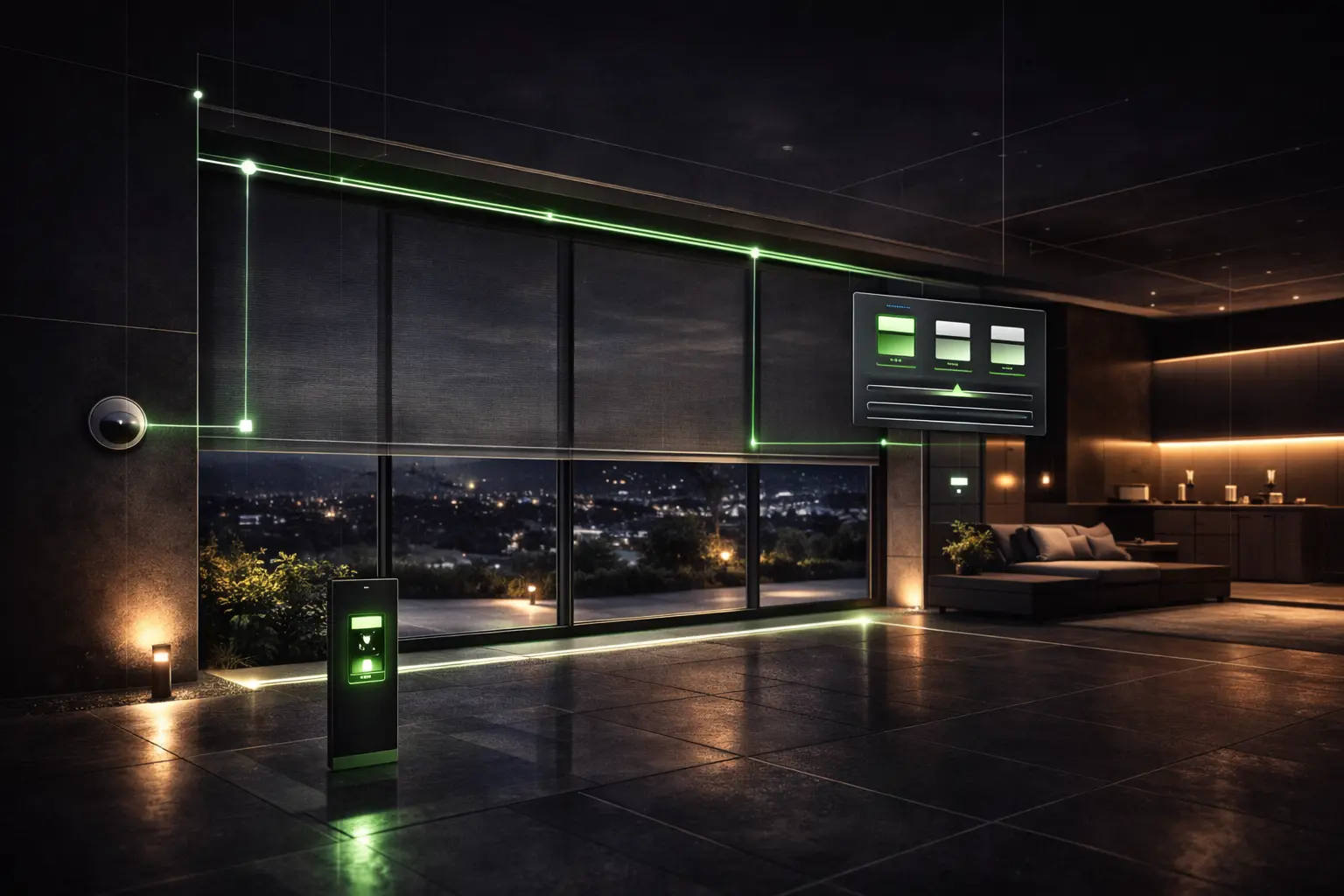
Blinds and Curtains
Automation of blinds and curtains helps manage light, privacy, and heat gain without daily routine. It is part of the architecture of comfort, not a separate window-control feature
- Automatic operation based on time of day and home scenarios
- Privacy in the evening without having to go around every window manually
- Glare protection for work, TV viewing, and relaxation
- Reduced summer overheating through integration with climate control and the home’s overall logic
- Unified control by zone or across the entire home
- “Morning”, “Day”, “Evening”, “Movie”, and “Sleep” scenarios — clear and predictable
- Away mode with visual activity in the home when needed
- Configured to the architecture: different windows can follow different logic
- “Day”: shading during strong sunlight to reduce glare and overheating
- “Evening”: privacy in all zones with one action
- “Movie”: blinds close and lighting shifts into a softer mode
- “Sleep”: comfortable darkness and a calm atmosphere
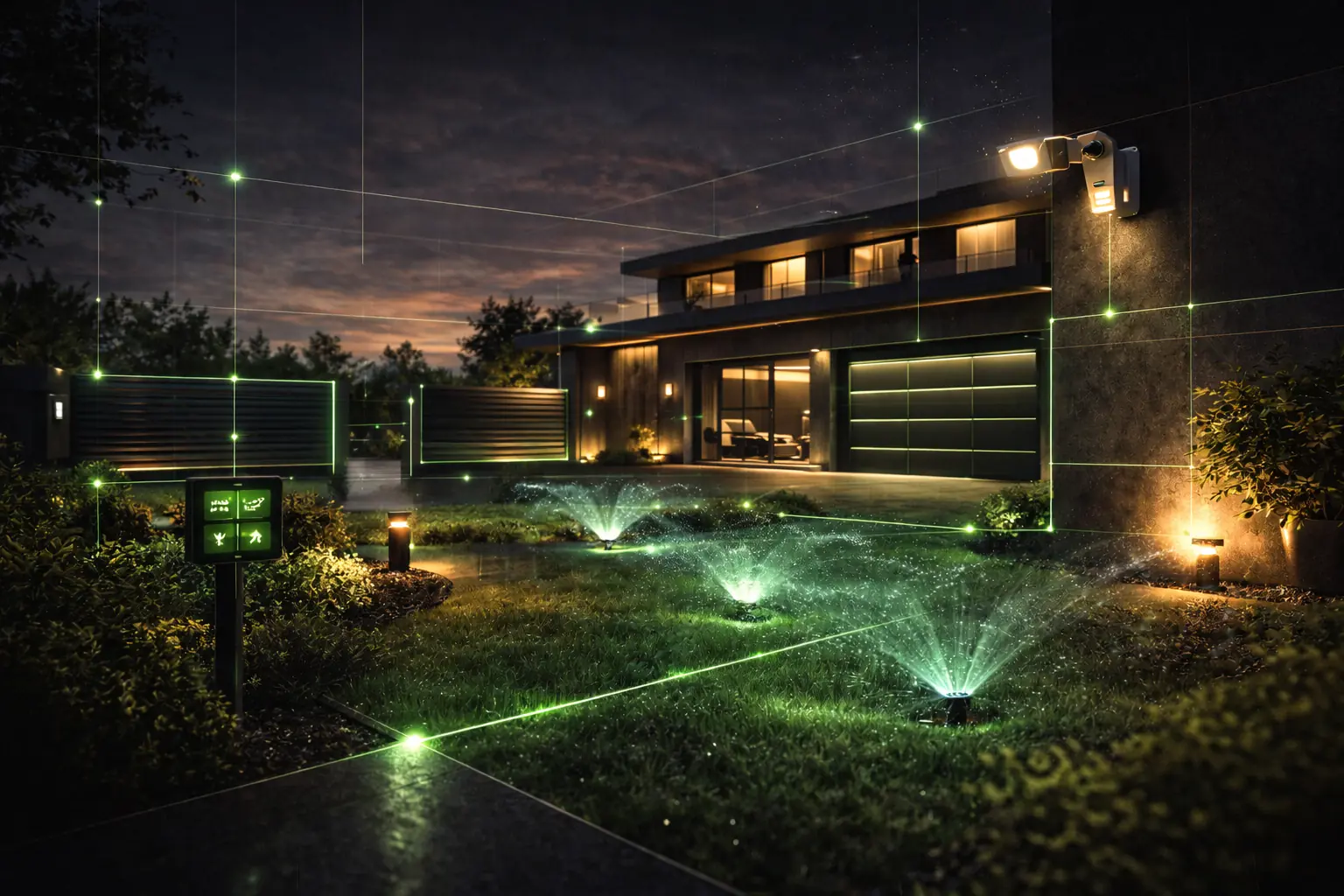
Outdoor and Access
A smart home does not end at the interior. Gates, garage, outdoor lighting, and access can work as part of one overall system: safely, conveniently, and in line with scenarios for the whole property
- Arrival and departure scenarios where gate, garage, lighting, and the right home modes work together
- Lighting for pathways, terraces, and the site as part of scenarios and schedules
- Logic based on twilight and presence so light activates only where and when it is needed
- Integration of intercom, door entry, and access control into the wider system
- Different scenarios for entrance, outdoor areas, terrace, and garden
- Irrigation by schedule and scenarios — depending on the project and equipment compatibility
- Responses to motion and outdoor events in night mode
- Unified control of outdoor zones and the house without a collection of separate interfaces
- “Arrived”: access opens and driveway and pathway lighting turns on
- “Night”: route lighting activates on movement
- “Away”: safe mode with unnecessary functions switched off
- “Evening on the terrace”: soft lighting, music, and the right level of privacy
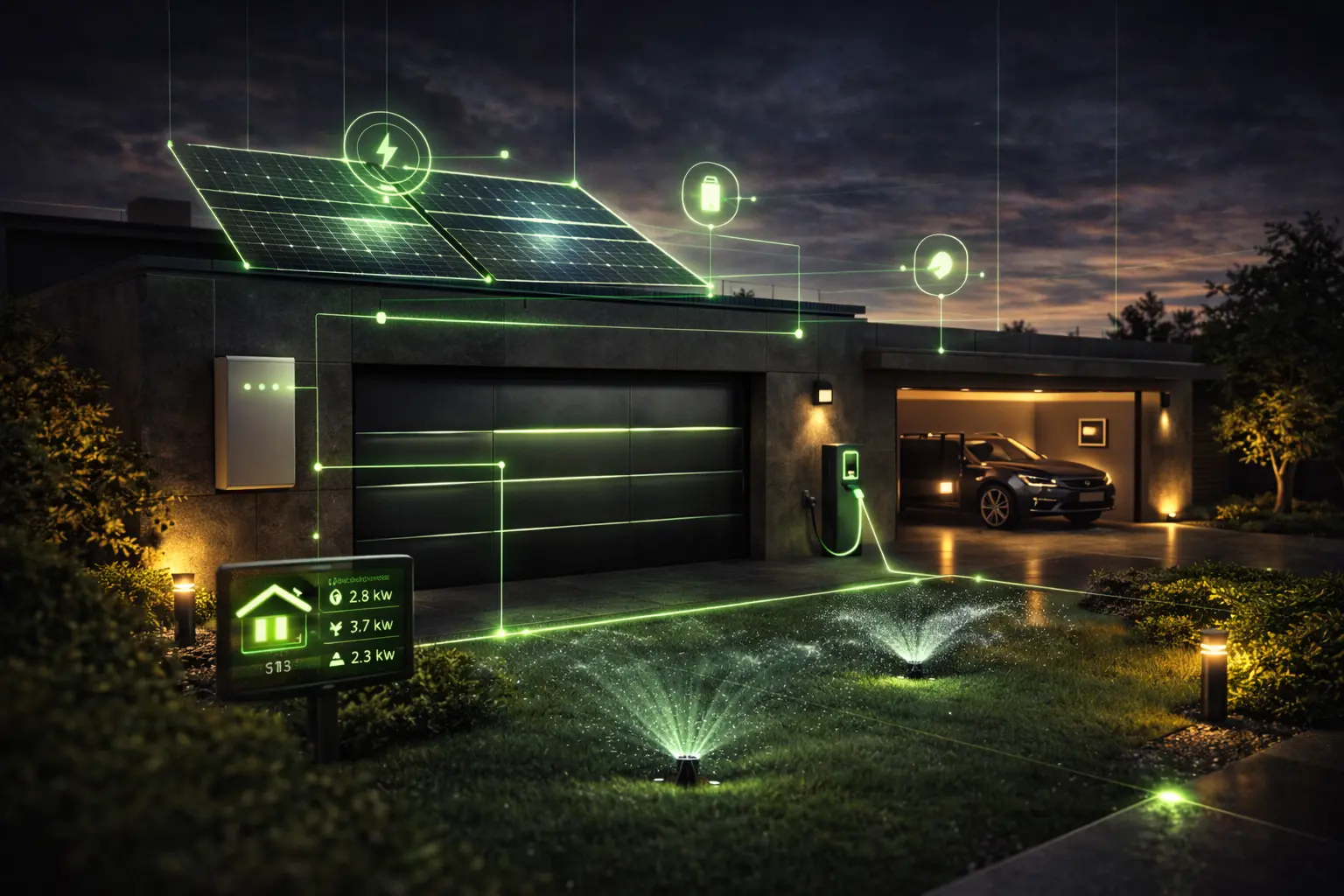
Energy
Energy management is about control, transparency, and the right priorities. The system helps you understand consumption, manage loads, and set operating modes that improve efficiency without reducing comfort
- Consumption monitoring: understanding where and when energy is used — depending on project scope
- Load priorities: critical systems remain active while secondary loads are limited or shifted
- Energy-saving scenarios for “Home Empty”, “Night”, and “Vacation” modes
- Management of energy-intensive consumers within the logic of the overall system — where included in the project
- Integration with PV, inverters, and EV charging where equipment is compatible
- Reduced peak loads and risk scenarios through priority logic
- Connection with climate control and blinds/curtains so efficiency becomes part of the overall architecture
- Transparent logic that can be clearly explained to the homeowner
- “Peak load”: limiting secondary consumers while keeping essential ones active
- “Night”: energy-saving mode without loss of basic comfort
- “Away”: minimal consumption and control of critical zones
- “Sun / surplus”: using available energy where PV/EV integration is compatible
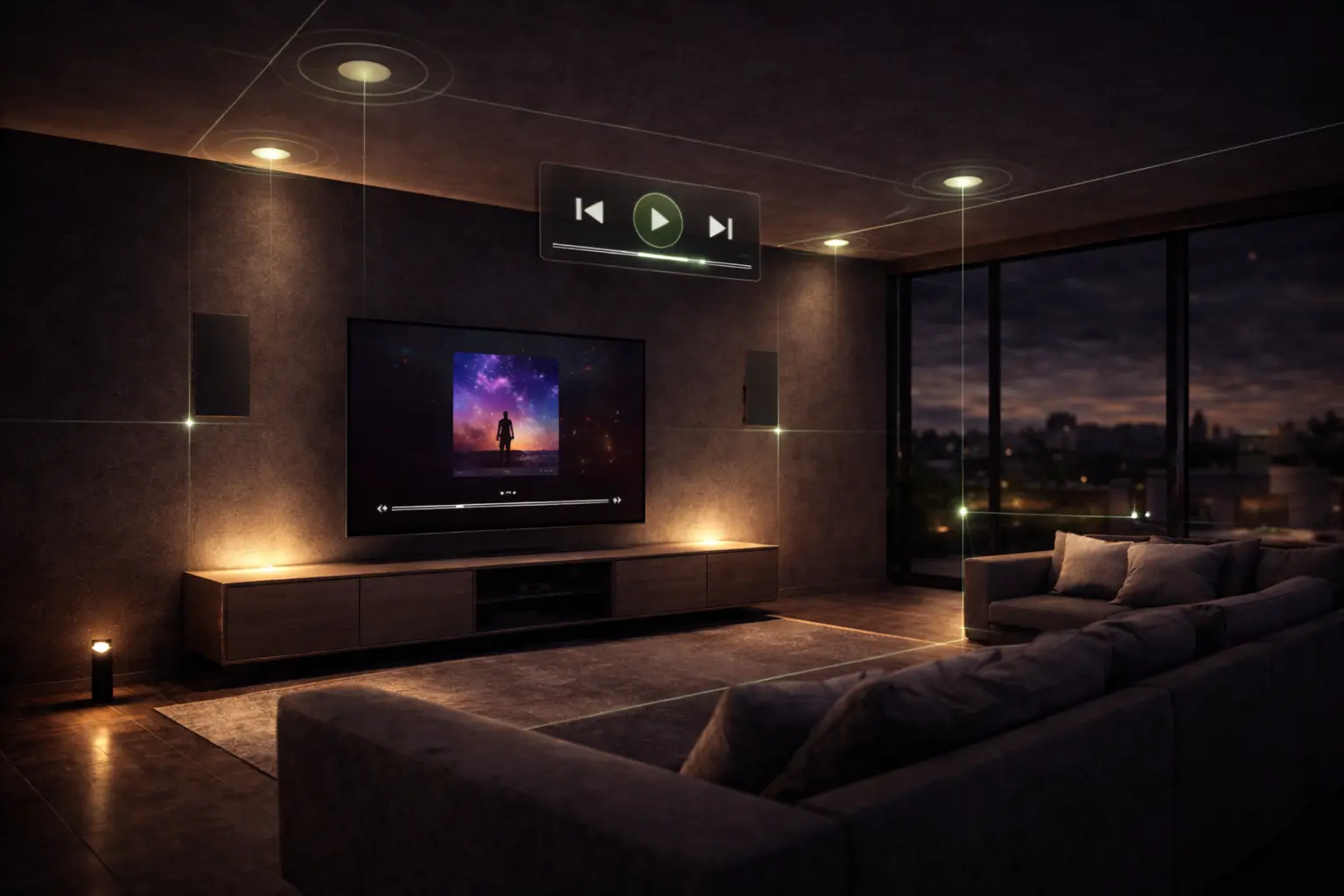
Audio
Multiroom audio is sound as part of the space and the home’s scenarios. No overloaded control: one logic across zones, clear modes, and stable operation as part of the overall system
- Multiroom by zone: different music in different rooms or one shared soundtrack throughout the house
- “Morning”, “Relax”, “Evening”, and “Guests” scenarios for the right zones
- Unified control without multiple separate apps and remotes
- Comfortable volume modes based on time of day and home scenarios
- Fast switching between zones: kitchen, living room, terrace, bedroom
- Integration of audio into wider scenarios: “Guests”, “Evening”, “Terrace”
- Clear user control: minimal, but sufficient
- Stable operation as part of one unified system rather than a separate standalone setup
- “Morning”: soft background sound in the kitchen and living room
- “Relax”: a calm mode in the selected zone
- “Guests”: music in shared spaces at a comfortable volume
- “Terrace”: a separate audio zone for the evening outdoors
Loxone + KNX: freedom of choice and one unified logic
Loxone brings the home together into one control system, while KNX expands the range of compatible devices within the project. The result is flexibility in equipment selection and a coherent scenario-based architecture without fragmented solutions